

001 — Place, Space & Shelter: A Philosophy of Architecture
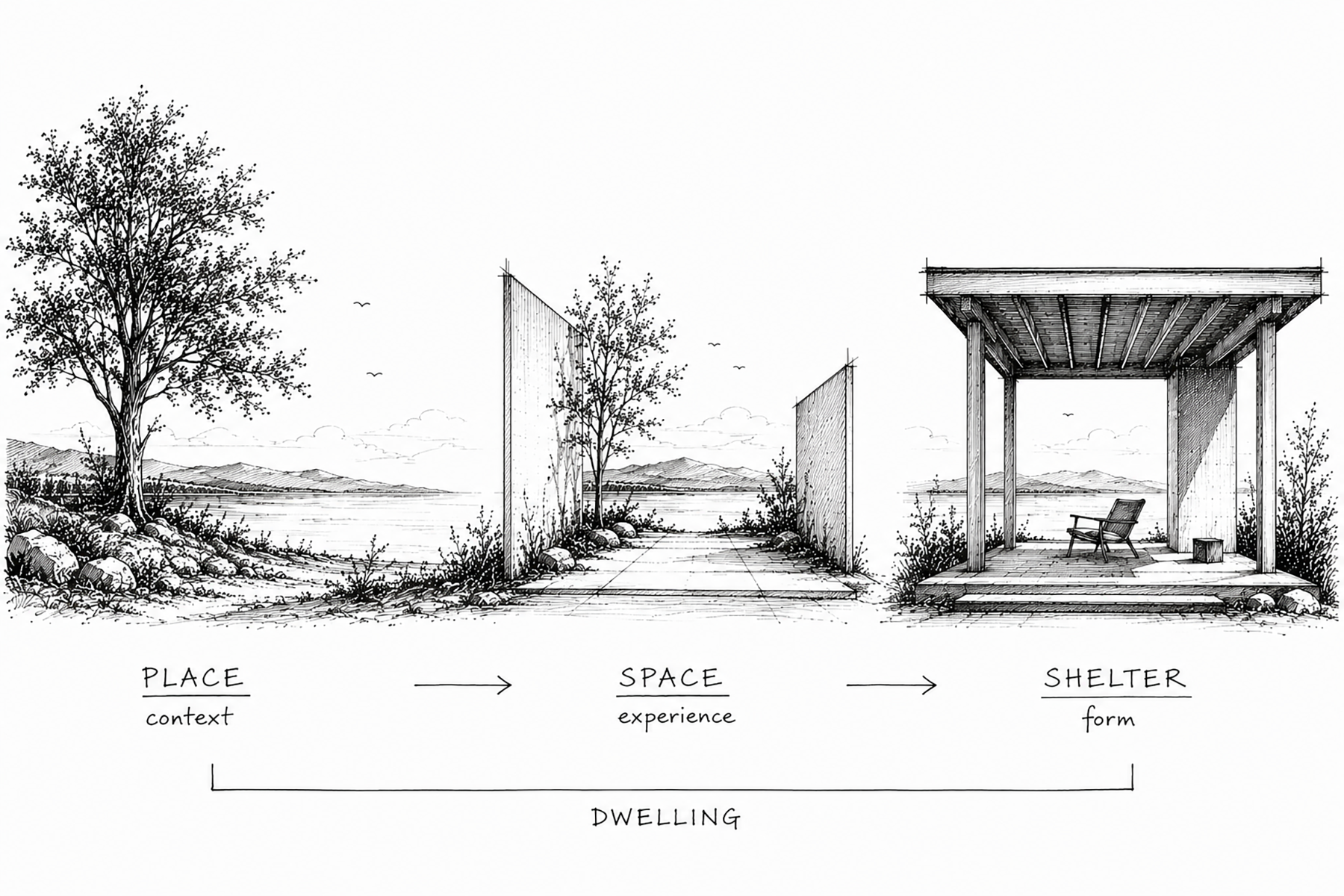
Place establishes context, space shapes experience, and shelter provides form. Together, Place, Space, and Shelter establish the conditions necessary for Dwelling.
Architecture is the design and building of Places, Spaces, and Shelters for human habitation.
Although architecture is often described as the art and science of building, that definition says little about its purpose. Buildings vary enormously in size, style, function, and complexity, yet all architecture shares a common concern: the creation of environments in which people live, work, gather, and dwell.
Architecture is one of humanity's enduring acts of civilization.
Before the formal development of architecture, humans sought shelter from the natural environment. Over time, construction evolved from necessity to a deliberate act of shaping the inhabited world. Architecture emerged when the creation of shelter became intentional, as individuals began to thoughtfully design and construct the environments in which they would live.
In this context, architecture is both practical and profound. It addresses immediate needs and simultaneously shapes the environments that influence how individuals, families, and communities experience the world.
Every architectural work, regardless of scale, style, or function, contributes to the creation of place, the formation of space, and the provision of shelter.
Place establishes context, space shapes experience, and shelter provides form. Together, Place, Space, and Shelter establish the conditions necessary for Dwelling.
The purpose of architecture extends beyond the construction of buildings; it seeks to enhance the quality of human experience.
Place
Architecture begins with Place.
Before any building exists, landscape, climate, history, and specific conditions already define the location. The land exhibits distinct topography, while the climate introduces sun, wind, rain, and seasonal variation. Surrounding structures, patterns of human activity, cultural influences, and collective memory all shape the character of a Place.
A Place is thus more than a mere point on a map; it possesses an identity shaped by both physical and cultural factors.
The architect is responsible for understanding these conditions. Effective architecture neither disregards its Place nor asserts itself without consideration. Instead, it responds to existing circumstances and aims to reinforce the relationship between people and their environment.
Regardless of whether it is situated in an urban neighborhood, rural landscape, or adjacent to a lake, architecture derives meaning from its connection to Place.
Space
While Place establishes context, Space offers experience.
Although architecture results in physical structures, individuals do not experience it solely as objects. Rather, architecture is perceived through the spaces these structures create. People move through rooms, gather in halls, occupy courtyards, traverse streets, and inhabit numerous other spaces in daily life.
Such spaces shape perception, influence behavior, and affect emotional responses.
Scale, proportion, light, sequence, enclosure, and movement collectively influence how a space is experienced. For example, a low ceiling can foster intimacy, while a tall volume may evoke awe. A carefully framed view can direct attention to the surrounding landscape.
Through such decisions, architects shape both the physical environment and the human experience.
The essence of architecture lies not only in floors, walls, and roofs, but also in the spaces they define and the lives that unfold within them.
Shelter
If Place establishes context and Space offers experience, then Shelter gives architecture form.
Shelter is architecture’s oldest responsibility.
Long before architecture became a formal discipline, people sought protection from weather, danger, and uncertainty. Although construction methods and architectural styles have evolved, this fundamental responsibility persists.
Yet Shelter encompasses more than physical protection.
A building may exclude rain and wind yet fail to offer comfort, refuge, or a sense of belonging. The quality of Shelter is assessed not only by its ability to protect but also by its ability to support human well-being.
Structure, material, craftsmanship, and construction each contribute to this responsibility. Architects must address durability, life safety, and performance, while also creating environments that offer comfort, permanence, and meaning.
Shelter provides architecture with physical presence; however, its true value is determined by the extent to which it supports those who inhabit it.
Dwelling
Place, Space, and Shelter do not constitute ends in themselves.
They exist to serve a greater purpose: Dwelling.
Human beings do more than occupy buildings. They form attachments, create memories, and establish routines, relationships, and traditions within them. Over time, buildings become homes, workplaces, institutions, landmarks, and settings for life itself.
To dwell is more than to reside. It is to belong.
Dwelling arises when Place, Space, and Shelter converge to support humanity across practical, social, emotional, and cultural dimensions.
A building may fulfill all technical requirements yet fail to foster meaningful dwelling. Conversely, a modest structure can attain significant architectural value by cultivating a profound sense of belonging and connection.
Architecture achieves significance when it enables individuals to dwell well.
The Measure of Architecture
Architecture is both practical and profound.
Architecture requires technical knowledge, disciplined execution, and a comprehensive understanding of construction. Simultaneously, it prompts broader questions regarding human relationships, community, and the Places inhabited.
The measure of architecture lies not in the building itself, but in the quality of experience it facilitates.
Place establishes context, Space offers experience, and Shelter imparts form. Collectively, they enable Dwelling.
The architect's responsibility encompasses both practical and profound dimensions: To thoughtfully design and construct Places, Spaces, and Shelters that enable individuals to dwell well and, in so doing, contribute to the ongoing development of culture and society.
Questions, thoughts, and discussion are always welcome.