

WOODSHED
Stillwater, NJ
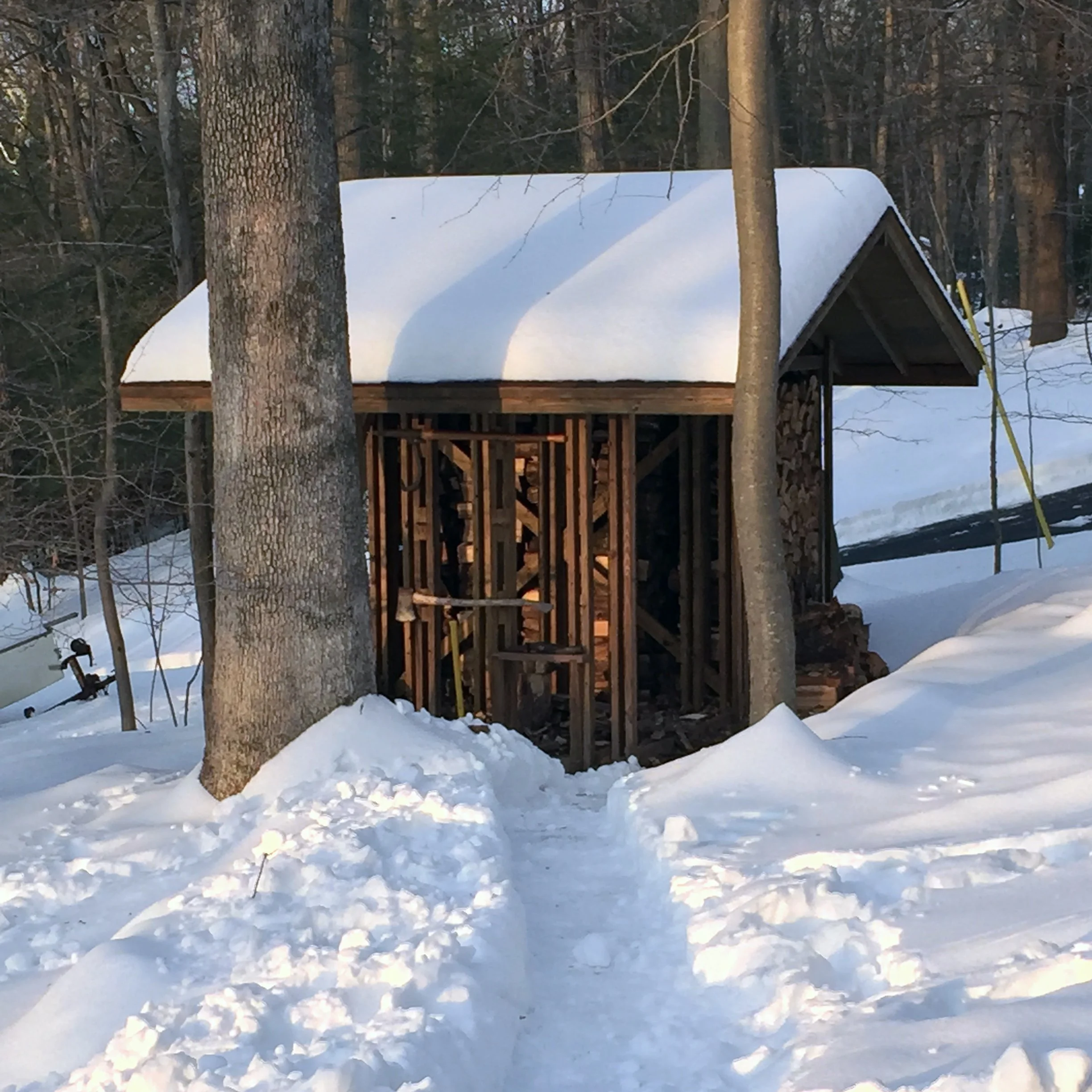
A Contemporary Interpretation of the Traditional Woodshed
This woodshed is conceived as a storage structure for a rural residence where firewood is the primary heat source. Historically, firewood has been integral to domestic life, and the woodshed has served as a vital extension of the house, supporting heating, cooking, and daily survival during winter. Designed to hold approximately four cords of firewood, the shed prioritizes winter use, ease of access, and effective drying.
Located as a freestanding outbuilding near the primary residence, the shed is tucked into the wooded edge of the front yard, maintaining an orderly presence while remaining visually unobtrusive within the landscape. The design emphasizes structural and functional integrity. A simple gabled roof shelters the interior from precipitation, and the exposed light timber frame serves multiple functions: supporting the roof, containing stacked firewood, and establishing visual order. The open structure facilitates natural ventilation for proper wood seasoning and incorporates storage for essential tools, such as a peavey, maul, axe, and wedges, within the framework.
Inspired by Japanese rural woodsheds, the project references a longstanding tradition of purposeful outbuildings. The resulting structure is durable and low-maintenance, reflecting the enduring relationship among fuel, shelter, and domestic architecture.
Architecture begins with understanding…
Every project is shaped by its Place, purpose, and the individuals it serves.
Every project begins with a conversation…
The first step is a conversation.
Schedule a time for a consultation.